
Back to Support & Success
Transfer Center
Get help planning your transfer to a four-year university with advising, workshops, and university connections.
Transfer Center
Transfer Benefits
A bachelor's degree that starts at WCC
Transferring is a planned process, not a single application. Students who start early at WCC arrive at a university with general education finished, junior standing, and in many cases a guaranteed seat.
Junior Standing on Arrival
Lower-division general education is finished before transfer, so university coursework focuses on the major from the first term.
Guaranteed Pathways
The Associate Degree for Transfer and the UC Transfer Admission Guarantee both lead to a reserved seat for students who qualify.
Two Years at Community College Cost
Half of your bachelor’s degree is completed at WCC tuition rates before transferring.
Credit That Carries Over
Course articulation is verified through ASSIST, so classes taken at WCC count toward the major at the receiving campus.
Transfer Help
Real people, real help, at every step.
Get help with the links, resources, and contacts below, organized by the stages of the transfer process. In addition to talking with your counselor, be sure to attend our Workshops, get help during an Open Lab, or make an appointment.
Explore transfer pathways
Planning your transfer begins with exploring where you can go and which admissions programs may support you. UC, CSU, private colleges, and out-of-state universities each offer different opportunities, pathways, or guarantees.
UC campuses and majors
Explore options across nine undergraduate UC campuses
The University of California has nine campuses, each with different majors, academic strengths, and student communities. As a transfer student, you’ll want to explore which UC fits your academic and personal goals. If your major has a UC Transfer Pathway, following that roadmap prepares you for admission to multiple campuses. Use UC TAP to keep track of courses, then meet with a counselor to confirm your plan.
Do all UC majors have Transfer Pathways?
Not all UC majors have Transfer Pathways. The program covers the most common majors across the system. If your major isn’t included, you can still transfer — you’ll just need to confirm requirements for each UC campus.
Use ASSIST.org to look up the exact courses needed, and meet with a Woodland Community College counselor to be sure your plan aligns with your intended UC major.
Do I have to decide on a UC campus now?
No, you can apply to multiple campuses. Exploring majors and pathways early just helps you stay prepared.
What is the difference between a UC and CSU?
California has two public university systems. The University of California (UC) is the research system of public higher education in California. The UC system emphasizes a theory-based approach to learning and offers doctorate programs in most disciplines along with graduate opportunities in medicine, dentistry, business, law, pharmacy, and veterinary medicine. The California State University (CSU) is the system of higher education in California that grants the highest number of Bachelor’s degrees. The CSU offers traditional and career specific majors with graduate opportunities at the Master’s level. The CSU has a more practical, career-oriented approach to education in contrast to the more theoretical approach offered by the UC.
Learn about UC Transfer
transfer requirements, prep programs, and financial aid across the system.
CSU campuses and ADT Pathways
Streamline transfer into California’s CSU system
The California State University system has 23 campuses with a wide range of majors and programs. By completing an Associate Degree for Transfer (ADT) at WCC, you can qualify for priority admission into a similar CSU major. An ADT ensures you arrive at CSU as a junior with most GE and lower-division coursework already completed. If your major doesn’t have an ADT, you can still transfer by meeting Cal-GETC requirements.
What is the difference between a UC and CSU?
California has two public university systems. The University of California (UC) is the research system of public higher education in California. The UC system emphasizes a theory-based approach to learning and offers doctorate programs in most disciplines along with graduate opportunities in medicine, dentistry, business, law, pharmacy, and veterinary medicine. The California State University (CSU) is the system of higher education in California that grants the highest number of Bachelor’s degrees. The CSU offers traditional and career specific majors with graduate opportunities at the Master’s level. The CSU has a more practical, career-oriented approach to education in contrast to the more theoretical approach offered by the UC.
Do all CSU majors have an ADT?
Not all majors or campuses. If your major doesn’t, you can still transfer by completing CSU GE or IGETC requirements and campus-specific prep.
UC Transfer Admission Guarantee (TAG)
Secure guaranteed admission at participating UC campuses
TAG provides an early, written guarantee of admission to one UC campus for students who meet GPA, unit, and course requirements. You’ll complete a TAG application in addition to the regular UC application. This program helps reduce uncertainty and gives you a clear target to work toward. Even if you submit a TAG, you can still apply to other UC campuses.
Private colleges
Transfer-friendly opportunities at private institutions
Over 80 private nonprofit colleges in California belong to the Association of Independent California Colleges and Universities (AICCU). These schools often offer smaller class sizes, strong support services, and generous scholarships. Use the AICCU tools to research programs, locations, and costs. Meeting with a university rep or counselor can help you understand transfer policies at private campuses.
Learn more
Out-of-state opportunities
Save tuition with WUE schools
Looking beyond California can expand your options. The Western Undergraduate Exchange (WUE) allows California students to pay reduced tuition at more than 160 public universities in 16 states. Students pay no more than 150% of the in-state rate, but not all majors qualify. Always confirm eligibility directly with the university before applying.
-
Links: WUE, NCES College Navigator,
HBCU Transfer Guarantee
Guaranteed admission to partner Historically Black Colleges
California community college students with a GPA of 2.5 or higher may qualify for guaranteed admission to participating HBCUs. You can meet eligibility by completing 30 transferable units or an ADT. Additional benefits include application fee waivers, housing priority, and scholarship review for students with a higher GPA. This program creates more options for transfer students while celebrating the legacy of HBCUs.
Admission Guarantees (TAG & ADT)
California offers two formal admission guarantees to community college students, and they work differently. One leads to the CSU system through a degree earned at WCC; the other is an agreement with a single UC campus, arranged a year before transfer. Students may pursue both at the same time.
Associate Degree for Transfer (ADT)
Priority CSU admission through a WCC degree
An Associate in Arts for Transfer (AA-T) or Associate in Science for Transfer (AS-T) is a 60-unit degree earned at WCC that is fully transferable to the CSU. Students who earn one and meet minimum CSU eligibility requirements receive priority admission to the CSU system — though not to a specific campus or a specific major. Admission to a CSU program deemed similar to the ADT carries a guarantee of finishing the bachelor’s degree within another 60 units.
Do all CSU majors have an ADT?
Not all majors or campuses. If your major doesn’t, you can still transfer by completing CSU GE or IGETC requirements and campus-specific prep.
Do I need an ADT to qualify for transfer to an HBCU?
No, you can qualify with 30 transferable UC/CSU units and a 2.5 GPA or higher.
Find AA-T and AS-T Degrees
icangotocollege.com
UC Transfer Admission Guarantee (TAG)
Guaranteed admission to participating UC campuses
Six UC campuses offer a Transfer Admission Guarantee to community college students who meet campus-specific requirements. A TAG provides early review of academic records, early admission notification, and specific guidance on major preparation and general education.
A student may hold a TAG at only one campus, and the TAG application is submitted the September before transfer — separate from, and earlier than, the regular UC application in November.
Keep in mind: TAG applications are due Sept. 30, but you can only apply for a TAG at one campus. To keep your options open, apply to other UC campuses during the regular application cycle (Nov. 1-30).
We offer TAG Workshops to walk you through your application for TAG. You also can drop in online or in person to one of our Open Labs for help:
- Friday, September 5th | 10:30 am – 12:00 pm
- Monday, September 8th | 1:00 pm – 2:30 pm
- Thursday, September 11th | 1:00 pm – 2:30 pm
- Tuesday, September 16th | 9:00 am – 11:00 am
- Monday, September 23rd | 9:00 am – 10:30 am
- Thursday, September 26th | 10:30 am – 12:00 pm
- Friday, September 27th | 12:30 pm – 2:30 pm
- Monday, September 30th | 9:00 am – 12:30 pm
Which UC campuses participate in TAG?
UC Davis, UC Irvine, UC Merced, UC Riverside, UC Santa Barbara, and UC Santa Cruz currently offer TAG.
What’s the difference between TAG and TOP?
TAG (Transfer Admission Guarantee) is the UC program that gives you a written guarantee of admission at participating campuses if you meet specific requirements. TOP (Transfer Opportunity Program) is UC Davis’s outreach program at partner colleges (like WCC) that provides workshops, advising, and support to help you prepare for transfer — including assistance with completing your TAG application.
Does TAG guarantee admission to all majors?
No, some majors have extra requirements or are excluded. Always check the specific campus guidelines.
Plan Transfer Coursework
Laying the right foundation in your coursework ensures a smooth transfer. Use official tools to track progress and confirm that your classes align with UC and CSU requirements.
Most transfer requirements are met through course selection over several semesters, not through the application itself. Three things drive those choices: which courses the receiving campus accepts, which general education pattern applies, and what the student’s education plan says.
Create an Education Plan
Semester-by-semester planning with a WCC counselor
Creating an Education Plan with a WCC counselor takes the guesswork out of transferring by mapping out your exact classes semester by semester. This personalized roadmap ensures you complete your Cal-GETC requirements and major prerequisites on time, saving you both money and semesters spent taking unnecessary courses. By aligning your schedule with your specific target university, you can stay on track and transfer with total confidence.
Am I required to meet with a counselor?
It’s highly recommended that every student review their education plan with a counselor as early as possible before or during your first semester. With the assistance of a counselor, you will select the best courses for your goals at Woodland Community College. Counselors will make recommendations and develop an educational plan to fit your academic goals.
Exempt students may not need to meet with a counselor depending on educational background or plans for study. If you meet two or more of the following criteria, you are not required to meet with a counselor:
- I have previously completed an associate or higher degree (specify college, degree, month/year awarded and include copy of degree or transcripts)
- I am concurrently enrolled in high school
- I will be enrolling in performance classes only (e.g. music, drama, physical education activity classes)
- I am currently enrolled at a four-year college or university (transcripts required)
- I am enrolling in fewer than six units
- I am not planning to earn a degree or certificate
- I am enrolling in job-skill upgrade, self-improvement, or general interest courses
- I am an English language learner taking ESOL classes.
- I am enrolling in classes for which I have previous training
How do I know which classes to take?
Start by exploring programs in our Interest Areas.
Every certificate and degree program has a Program Map that lists the required and recommended sequence of courses you can take. We’ve designed these Program Maps to help you find the most efficient path to completing your goals.
These maps do not replace your actual Student Education Plan, so be sure to talk with a Woodland Community College counselor to pick the right courses for your academic goals.
Complete Cal-GETC
The statewide general education pattern
Cal-GETC is the single general education pattern used by California community college students transferring to a UC or a CSU. It took effect in Fall 2025 and replaced both IGETC and CSU GE-Breadth. Certification requires 11 courses totaling 34 semester units, each completed with a grade of C or better, across six areas. Students who began at WCC before Fall 2025 and have stayed continuously enrolled may still have the option of completing one of the older patterns.
What is Cal-GETC, and how is it different from IGETC and CSU GE-Breadth?
The California General Education Transfer Curriculum (Cal-GETC) is a single, streamlined general education pattern designed to make transferring from a California Community College to either a California State University (CSU) or a University of California (UC) campus much easier and more efficient.
Starting with students who began classes in the 2025–2026 academic year or later, Cal-GETC establishes a unified 34-unit lower-division general education pathway. Successfully completing the full Cal-GETC pattern satisfies your lower-division general education requirements at your target university, ensuring you won’t need to take additional freshman or sophomore-level general education courses after you transfer.
Note: To receive credit toward Cal-GETC, all courses within the pattern must be completed with a grade of “C” or better (or a “Pass/Credit” designation if institutional policy defines it as equivalent to a “C” or higher).
Does completing Cal-GETC guarantee university admission?
No. Completing the Cal-GETC general education pattern satisfies your lower-division general education requirements, but it does not guarantee admission to a university campus on its own. You must still fulfill all other transfer requirements, including major preparation coursework and minimum GPA thresholds.
CSU “Golden Four” courses
Key courses required before CSU transfer
All CSU transfers must complete the “Golden Four”: Written Communication, Oral Communication, Critical Thinking, and Math/Quantitative Reasoning with C- or better.
UC TAP planner
Keep track of progress toward UC transfer
UC TAP lets you enter courses, grades, and future plans. It’s required for TAG and makes the UC application easier.
Check Course Articulation
Verify lower-division major requirements with ASSIST
ASSIST is the official statewide record of how community college courses transfer to UC and CSU campuses. It shows which WCC courses satisfy lower-division major preparation at a specific campus for a specific major, and it is the source counselors use when building education plans.
Apply to a University
Applying to universities can feel overwhelming, but WCC offers workshops and counseling to help you through each step.
CSU and UC applications open in October and are submitted in November for the following fall. Each system uses its own application platform with its own writing requirements.
Transfer Center staff can review applications with you before submission. Preparing early and having your application reviewed helps reduce mistakes.
Personal Insight Questions and Application Essays
Writing requirements and draft review
The UC application requires written responses to personal insight questions, and some CSU campuses and programs ask for supplemental writing. These are evaluated as part of admission review, and strong responses take more than one draft. The Transfer Center reviews drafts during workshops and appointments.
Workshops for UC PIQs
Apply to UC and craft strong PIQs
UC uses a single application for all campuses. As part of the application, you’ll respond to Personal Insight Questions (PIQs) that highlight your experiences and strengths. Reviewing the PIQ prompts early gives you time to reflect and write strong responses. Counselors and workshops can guide you through brainstorming and editing.
Application Workshops and Open Labs
Guided help during application season
The Transfer Center runs workshops and drop-in open labs during application season, covering UC and CSU transfer requirements, the admission applications, and the UC personal insight questions and Transfer Admission Guarantee. Open labs are staffed working sessions where students complete applications with help on hand.
Meet with a WCC Counselor
Appointments, degree checks, and petitions
General counseling appointments cover transfer requirements, degree progress, and application questions. Counselors also verify that graduation petitions and degree paperwork are submitted on time, which matters for ADT students because CSU admission depends on the degree being awarded.
Cost expectations and financial aid
Tuition varies widely across the systems a WCC student might transfer into, and financial aid does not carry over automatically. Cost is worth estimating early enough to influence the list of campuses applied to.
Compare Costs Across Systems
Tuition, housing, and net price estimates
Annual tuition differs substantially between the CSU, the UC, private colleges, and out-of-state public universities, and published tuition is only part of the total. Housing, fees, and books often account for more of the difference than tuition itself. Net price calculators on each campus site give a closer estimate than a published sticker price.
Western Undergraduate Exchange (WUE)
Reduced tuition at western public universities
The Western Undergraduate Exchange lets students from participating western states pay a reduced tuition rate at participating public universities outside California. Not every campus or major takes part, and some programs have separate application deadlines, so eligibility is checked campus by campus.
Transfer Scholarships and Grants
Awards open to transfer students
Some scholarships are open specifically to transfer students, awarded either by the receiving university or by outside organizations. Deadlines frequently fall earlier than the admission application deadline.
Financial Aid After Transfer
FAFSA, Cal Grant, and university aid
Aid does not transfer with the student. A new FAFSA or California Dream Act Application is filed each year, with the receiving university listed as the school. Cal Grant eligibility can carry forward but must be reported correctly, and each university awards its own institutional aid on its own timeline.
Transfer Events and Campus Tours
Campuses look different in person than they do online, and most host events built specifically for prospective and admitted transfer students. Tours run year-round and are open to anyone still deciding. Preview and open house events cluster in the spring and are usually aimed at students who have already been admitted. Registration is handled by each university and often fills early.
WCC Transfer Fair
Annual one-day event, meet with many universities at our Woodland Campus
Each fall the Transfer Center brings representatives from UC, CSU, private, and out-of-state universities to campus for a single day. It is the one event where students can compare several universities in one afternoon without booking separate appointments.
Check back for our next Transfer Fair.
Are you a University Rep? Sign up to host a table at our next Transfer Fair or email aruiz1@yccd.edu for more information.
UC Campus Visits
Tours, open houses, and transfer programs
UC campuses offer free student-led tours nearly every day of the year, and reservations usually need to be made in advance. Every campus also runs virtual tours and webinars for students who cannot travel, and each has a Transfer Prep Program with staff dedicated to community college students.
UC Davis Events
The closest UC campus to WCC, and the one with the most programming built specifically for community college transfer students.
- Aggie to Be — a summer program for students who just finished high school and are starting at WCC with UC Davis as a goal. Housing, meals, and supplies are provided.
- Aggie Transfer Scholars Weekend — a four-day residential summer program for students planning to apply to transfer. Applications are competitive and a UC TAP account is required.
- Aggie Day transfer agenda — the spring open house, with sessions and a transfer student panel.
- Events for Future Aggies — virtual information sessions and the full schedule of where UC Davis representatives will be.
All UC Campuses
- Campus visits and events — tours, open houses, and virtual events at each of the nine undergraduate campuses.
CSU Campus Visits
Tours and seasonal open house events
CSU campuses run weekday tours year-round and host open house events in the fall for prospective students and in the spring for students who have already been admitted. Spring events are usually invitation-based, so applying on time matters if you are trying to attend.
Sacramento State
- Prospective Students Campus tours — hour-long walking tours weekday mornings, by registration.
- Admitted Student Day — a April event for admitted students, with campus and housing tours. Separate from New Student Orientation.
Chico State
- Schedule a tour in English or Spanish — weekday campus tours, academic department tours, virtual tours, and admissions counselor appointments.
- Wildcat Preview — the fall open house for prospective students and families.
- Choose Chico — the spring event for admitted students. Registration invitations are emailed to admitted students.
Find Your Campus Rep
Admission representatives from four-year campuses visit WCC throughout the year for one-on-one advising, and the Transfer Center hosts an annual Transfer Fair each fall. Events and Tours are scheduled by campus and change every term.
Find your University Representative below, and they can help you learn about:
- Transfer requirements
- The admissions application process
- Majors offered
- Student support programs
Drop-In and Appointment Schedule
Find all the times you can meet with campus reps
Schedule coming soon!
UC Davis
Eddie Ramirez—Virtual advising, tours, events, and multi-day experiences

Eddie Ramirez can help you navigate the transfer process and achieve your goals at UC Davis!
UC Davis Admissions Advisor
edramirez@ucdavis.edu
(530) 752-2971
Aggie Transfer Scholars Weekend
Open to students who qualify. Offered yearly in August.
Apply to this four-day immersive experience and participate in workshops, campus activities and mentorship to prepare for UC transfer. Includes housing, meals and program supplies.
Sac State (CSU Sacramento)
Tommy Ngo—In-person drop-in and virtual advising
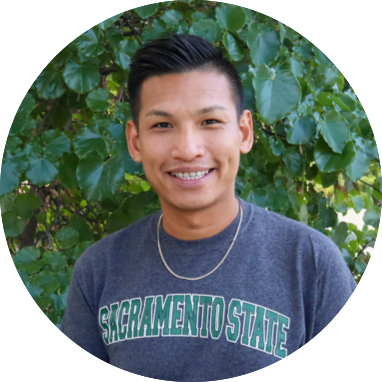
Tommy Ngo can help you navigate the transfer process and achieve your goals at CSU Sacramento! Tommy is available to meet one-on-one by appointment or during drop-in hours.
CSUS Admissions Counselor
h.ngo@csus.edu
Chico State
In-person drop-in and virtual advising
Cherryl Haynes can help you navigate the transfer process and achieve your goals at Chico State!
- Meet one-on-one by appointment
- Drop-in Hours
CSU Chico Admissions Transfer Advisor
chaynes1@csuchico.edu
(530) 898-5935
CSU Sonoma
Emily Uhrich—Virtual Drop-In and Online Appointments
Emily Uhrich | 707-664-2229 | uhriche@sonoma.edu
Pre-Admissions Counselor
Sonoma State University
1801 East Cotati Ave
Rohnert Park, CA 94928
Appointments
Can’t make it to one of our workshops? You can schedule one-on-one appointments with Aracely to get help with your application, review your personal insight questions (PIQs), or any other transfer questions you may have.
Book online with the link below, or call 530-661-5703
Locations & Hours
Woodland Campus
Transfer Center
Visit us in Bldg 700, Room 158
Resources Available
- College Brochures: Review printed pamphlets and flyers with information for CSU, UC, Private and out-of-state colleges.
- Free college merch and stickers when available
- Business Cards for a wide range of college representatives
Our Staff
Program Lead
Links & Resources
FAQs
Yes, but there are important things to know:
- You must report all previous colleges attended—even if you had poor grades. Failing to report them can result in revoked admission or even loss of a degree.
- If you’ve already earned a bachelor’s degree, you’ll need to check with each university about their policy on earning a second bachelor’s. Some allow it; others do not.
For most students who intend to transfer as juniors, it is important to take general education courses and courses in your major. You should consult with a counselor to determine which lower division (freshman-sophomore level) major courses might be advisable to take.
Representatives from many colleges have virtual and face to face appointments available. Check the webpages to get appointment information or contact information the Counseling Department at (530) 634-7766.
To apply to a CSU or UC campus, submit your application online:
- UC Application:
Fall transfer only
– Open: August 1
– Submit: November 1–30 - CSU Application:
Spring: Apply August 1–30
Fall: Apply October 1–November 30
Be sure to apply to the major you plan to pursue. Changing your major after transfer depends entirely on the university’s policies.
If you complete all of the GE and lower division major requirements, and a total of 60 transferable semester units, and continue at the transfer institution full-time (15 units per semester), you should be able to graduate two years after transfer. Students who double major or add on a minor may take longer.
California has two public university systems. The University of California (UC) is the research system of public higher education in California. The UC system emphasizes a theory-based approach to learning and offers doctorate programs in most disciplines along with graduate opportunities in medicine, dentistry, business, law, pharmacy, and veterinary medicine. The California State University (CSU) is the system of higher education in California that grants the highest number of Bachelor’s degrees. The CSU offers traditional and career specific majors with graduate opportunities at the Master’s level. The CSU has a more practical, career-oriented approach to education in contrast to the more theoretical approach offered by the UC.
Most transferable college courses will be accepted, but there are a few important rules:
- Pass/No Pass (P/NP) grades generally transfer, but some universities limit how many. Avoid using P/NP for major prep courses. “P” means you earned a C or better but it won’t affect your GPA.
- “D” grades may transfer depending on the university, but they do not meet IGETC or CSU GE requirements in Areas A1, A2, A3, and B4. Major courses typically require a C or better. You may need to repeat D grades to improve your GPA.
- “W” (Withdrawal) grades don’t usually affect admission decisions unless there’s a consistent pattern.
- If you’ve taken more than 70 transferable units, only the first 70 will count toward your transfer unit total—but the content of all courses may still meet subject or major requirements.
If you have taken more than 70 transferable units, the content of the courses may be used to satisfy subject area requirements.
The quarter system is the division of the academic year into three equal parts. Each quarter is 10 weeks in length, and there are usually three quarters (fall, winter and spring) per academic year. All UC campuses, except UC Berkeley and UC Merced, are on a quarter system. In the UC system, three quarters constitute an academic year. A semester is the other type of term within an academic year. Each semester is 18 weeks in length, and there are two semesters (fall and spring) in an academic year. Summer session and intersession (between terms) are available at some campuses.
GE or General Education is a program of courses that provides a broad educational experience. Courses are usually introductory in nature and provide students with fundamental skills and knowledge in English, arts, humanities, mathematics, social and behavioral sciences, and physical and biological sciences.
The California General Education Transfer Curriculum (Cal-GETC) is a single, streamlined general education pattern designed to make transferring from a California Community College to either a California State University (CSU) or a University of California (UC) campus much easier and more efficient.
Starting with students who began classes in the 2025–2026 academic year or later, Cal-GETC establishes a unified 34-unit lower-division general education pathway. Successfully completing the full Cal-GETC pattern satisfies your lower-division general education requirements at your target university, ensuring you won’t need to take additional freshman or sophomore-level general education courses after you transfer.
Note: To receive credit toward Cal-GETC, all courses within the pattern must be completed with a grade of “C” or better (or a “Pass/Credit” designation if institutional policy defines it as equivalent to a “C” or higher).
Certification of CSU GE-B or IGETC is important in the transfer process. All California State Universities accept a common pattern of general education. The certification is the official notice verifying that a transfer student has completed courses satisfying lower division general education requirements. The universities can only require upper division GE and graduation requirements for students who are fully GE certified by the community college.
The request for certification of CSU GE or IGETC is done at the time you request transcripts be sent to the university. All areas of CSU GE-B or IGETC must be completed for full certification. Partial certification by area is possible for the CSU GE-B. Partial certification of IGETC is restricted to having all but a maximum of two classes completed. (Pass grades [P] are acceptable as long as they are equivalent to “C” or better grades where taken.)
Woodland Community College (beginning Fall 2021) offers a Certificate of Achievement (CA) in CSU GE-B and a Certificate of Achievement (CA) in IGETC. These certificates do not take the place of the GE Certification as the GE Certification is a separate document sent directly to the CSU or UC.
Yes. You are required to report all previous institutions that you have attended, and you don’t want to provide false information since that could potentially revoke your admission or degree.
Articulation helps determine how your Woodland Community College courses meet GE, major, or transfer credit at other colleges. You can still transfer to a college even if WCC doesn’t have a formal articulation agreement with that school. These agreements simply make it easier to match courses for credit. Use ASSIST.org to check how your courses transfer to CSU and UC campuses. For non-CSU/UC schools, work closely with your counselor and the university to confirm which classes will be accepted.